
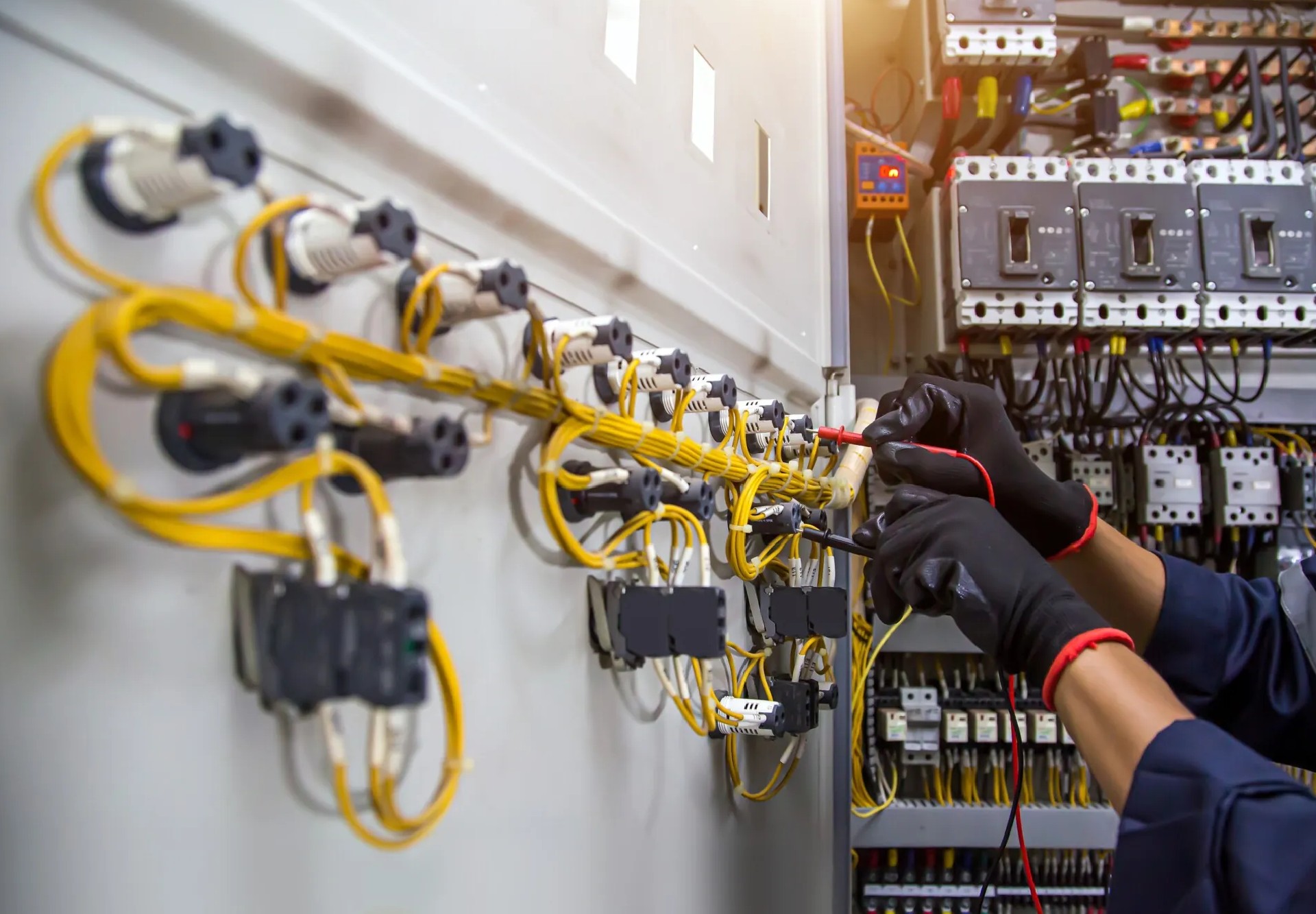
Quick answer: To prevent commercial electrical fires, schedule regular inspections by a licensed electrician, use thermal imaging to find hot spots before they fail, avoid overloading circuits, replace damaged wiring and equipment, keep panels clear and dry, and act immediately on warning signs like flickering lights, burning smells, or tripping breakers.
Electrical fires are one of the most preventable emergencies a business can face. Unlike many hazards, electrical systems usually give warnings before they fail. The challenge is that in a busy commercial building, those warnings are easy to miss. This guide covers why electrical fires start, the signs to watch for, and the steps building owners and facility managers can take to lower the risk.
Why electrical fires start in commercial buildings
Commercial buildings place heavy, constant demand on their electrical systems. Most fires start from a few common problems:
- Overloaded circuits and power strips. Too many devices on one circuit make wiring run hot.
- Aging or outdated wiring. Insulation breaks down over time, especially in older buildings or after renovations.
- Loose connections. Loose terminals at panels, outlets, and equipment create resistance and heat.
- Damaged cords and equipment. Frayed cords, failing motors, and worn plugs can spark or overheat.
- Poor maintenance. Dust, moisture, and neglected panels make every other problem worse.
- Improper repairs or DIY work. Work done without a licensed electrician or permits can hide serious hazards.
Warning signs you should never ignore
Call a licensed electrician promptly if you notice any of these:
- Breakers that trip repeatedly
- Lights that flicker or dim when equipment turns on
- Outlets, switches, or panels that are warm to the touch
- A burning or hot-plastic smell with no clear source
- Discolored, scorched, or buzzing outlets and cover plates
- Sparks when plugging in or unplugging equipment
If you smell smoke or see flames, leave the building and call 911 first. Do not try to fix it yourself.
8 ways to prevent commercial electrical fires
1. Schedule professional electrical inspections
A licensed electrician can check panels, wiring, grounding, and connections for wear, corrosion, and code issues. Regular inspections catch problems while they are still minor repairs instead of emergencies.
2. Use thermal imaging (infrared scans)
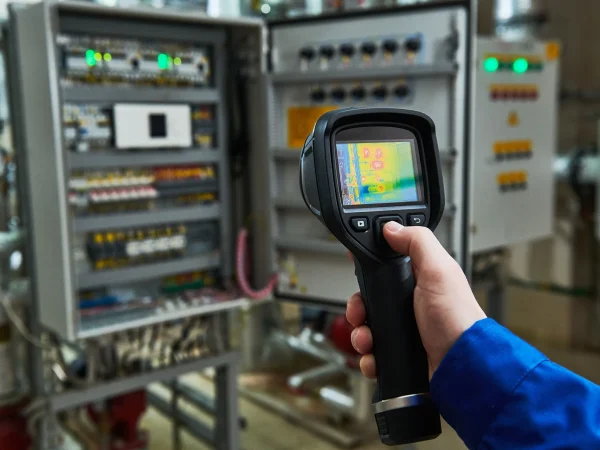
Failing connections and overloaded components heat up long before they fail. A thermal imaging scan shows those hot spots without shutting down the building or opening up walls. It is one of the most effective ways to find hidden problems early.
3. Don’t overload circuits
4. Replace damaged or outdated components
Repair or replace frayed cords, cracked outlets, failing breakers, and old panels. In older buildings, ask an electrician whether the wiring can still handle your current load.
5. Keep electrical panels clear, dry, and accessible
Panels need clear space around them, and nothing should be stored in front of them. Keep them free of moisture, dust, and clutter so breakers work as designed and staff can reach them in an emergency.
6. Use the right protective devices
Ground-fault circuit interrupters (GFCIs) and arc-fault circuit interrupters (AFCIs) are designed to cut power when they detect dangerous conditions. Ask your electrician which protection your building needs, and test GFCIs on a regular schedule.
7. Train staff to spot and report problems
Employees are often the first to notice a warm outlet or a burning smell. Give your team a simple way to report concerns, and make sure they know not to use equipment that seems damaged.
8. Hire licensed electricians for all electrical work
Permits, inspections, and qualified work protect your building, your employees, and your insurance coverage. Unpermitted or amateur work is a common source of hidden hazards.
Commercial electrical maintenance schedule
Task | Suggested frequency |
Visual walk-through for damaged cords, outlets, and panels | Monthly |
Test GFCI outlets | Monthly |
Review circuit loads after adding equipment | Whenever the building’s use changes |
Thermal imaging scan of panels and key equipment | Annually, or as your insurer or electrician recommends |
Full electrical inspection by a licensed electrician | Periodically, based on building age, use, and local requirements |
These are general guidelines. Your insurance provider, local code, and a licensed electrician may require different intervals. Industry standards such as NFPA 70B cover electrical maintenance programs in detail.
When to call a professional
Call a licensed commercial electrician if you see warning signs, plan renovations or new equipment, are buying or leasing a building, or haven’t had an inspection in years. A small repair now is far cheaper than a fire, downtime, or an insurance dispute later.
Frequently Asked Questions
What causes most commercial electrical fires?
Common causes include overloaded circuits, loose or damaged wiring, faulty equipment, and poor maintenance. Many of these problems develop slowly, which is why regular inspections matter.
How often should a commercial building have an electrical inspection?
It depends on the building’s age, use, and local requirements. Many businesses schedule inspections on a regular cycle and add thermal imaging annually. Your electrician and insurance provider can recommend a schedule.
What is thermal imaging in an electrical inspection?
Thermal imaging uses an infrared camera to detect heat in electrical equipment. Hot spots often point to loose connections, overloaded circuits, or failing parts, so they can be fixed before they cause a failure.
Can I use extension cords and power strips permanently?
They are meant for temporary use. If you rely on them every day, you likely need more outlets or circuits, which an electrician can add safely.
What should I do if a breaker keeps tripping?
A breaker that trips repeatedly is a warning sign of overload or a fault. Stop using the affected equipment and call a licensed electrician rather than resetting it again and again.
What are signs of an electrical problem in a commercial building?
Look for flickering lights, warm outlets or panels, burning smells, buzzing sounds, scorch marks, and frequent breaker trips.
Protect your building before a problem starts
Preventing an electrical fire takes regular attention, and professional inspection is the best starting point. If it has been a while since your last check, Rolwes Electric can inspect your electrical system and recommend next steps. Contact us / Schedule an inspection.