
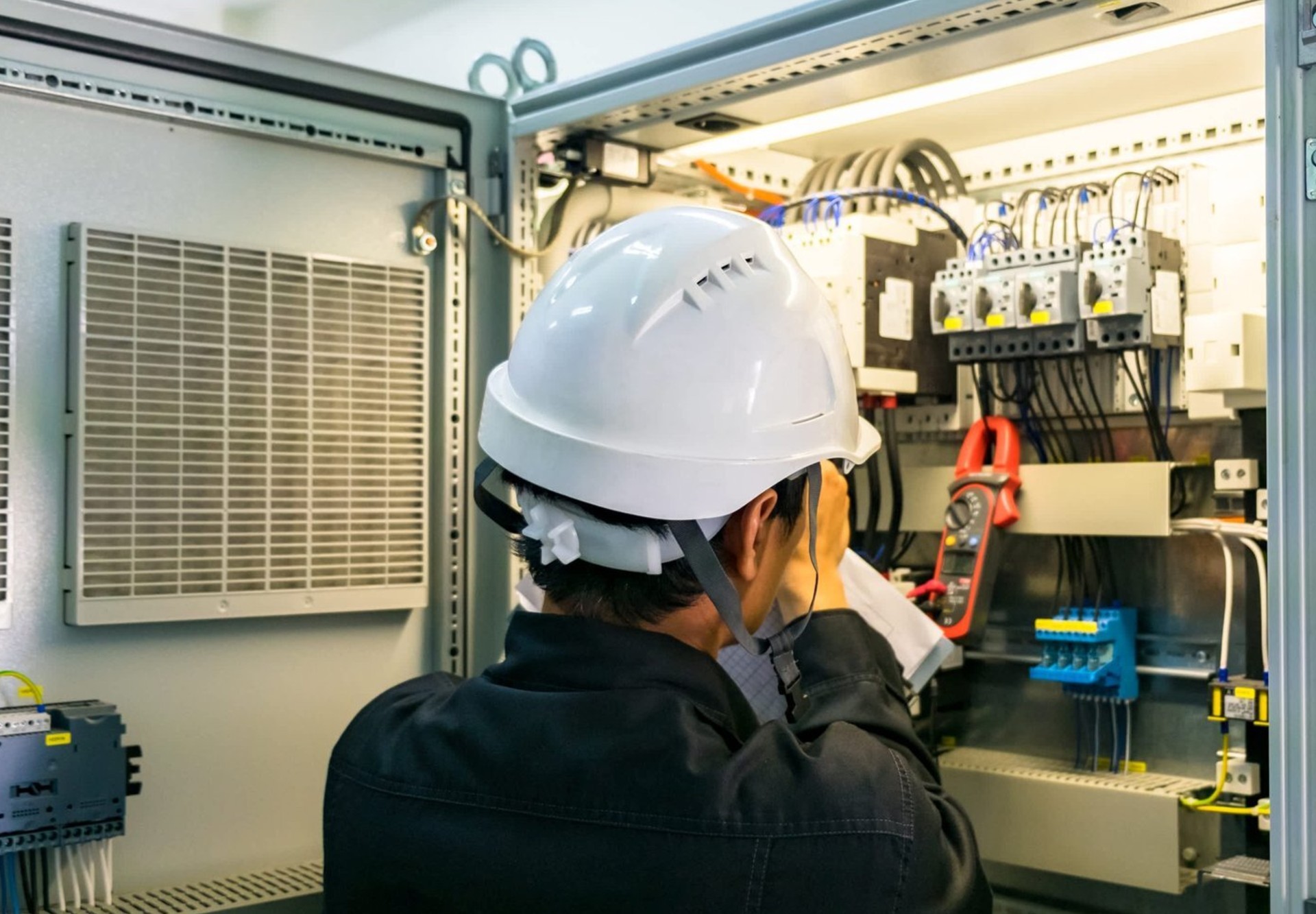
For a business, electrical power is not a convenience. It is how the doors open, the machines run and the work gets done. A tripped breaker can stop a production line, and a failing panel can close a shop for the day. That is why the electrician you call matters.
A business electrician works on commercial and industrial buildings every day. This guide explains what sets that work apart, when your facility needs one, and how to choose a contractor you can rely on.
Have an electrical issue right now? Call Rolwes Electric at 314-249-5563 or request an estimate.
What a Business Electrician Does Differently
Residential and commercial electrical work share the same basics, but the setting changes a lot. A business electrician typically works with:
- Larger and more complex systems, including three-phase power and heavier loads.
- Distribution equipment such as switchgear, panelboards, transformers, disconnects and motor control centers.
- Equipment controls, including motor controls and lighting controls that keep a facility running.
- Schedules built around your operations, so work does not stop your business longer than it has to.
- Commercial permits, inspections and documentation, which differ from those on a typical home project.
The terms “business electrician” and “commercial electrician” are often used to mean the same thing: an electrician who works on non-residential buildings.
Five Situations Where You Need a Business Electrician
1. You are expanding, remodeling or building out a space
A tenant buildout, a new work area or added equipment usually means new circuits and a check on whether your electrical capacity can handle the load.
2. Breakers keep tripping or equipment keeps faulting
Repeated trips are a signal, not a nuisance. A qualified electrician can find the cause, whether it is an overloaded circuit, a failing component or a connection that has worked loose. Our guide to the risk of delaying electrical repairs covers the warning signs in more detail.
3. You are adding or moving equipment
New machinery, relocated equipment or changes in how a space is used all affect the electrical system behind them. Planning the electrical side first avoids costly surprises.
4. You need to document the condition of your equipment
Infrared thermal imaging can show abnormal heat on accessible electrical equipment while it is operating, and the findings help document areas that need a closer look. Read more about our thermal imaging inspections.
5. You want a maintenance plan, not just emergency fixes
NFPA 70B provides guidance for electrical equipment maintenance programs. A business electrician can help you set up routine inspections and maintenance that fit your equipment and how critical it is.
What You Get From Reliable Commercial Electrical Support

- Fewer surprises. Problems are found during planned visits, not during your busiest day.
- A safer workplace. Qualified people handle hazardous work using proper procedures.
- Work scheduled around you. A contractor used to commercial sites plans for your hours.
- Clear records. Findings and repairs are documented, which helps with maintenance planning.
- Room to grow. Someone who knows your system can tell you what it can handle before you add to it.
How to Choose a Business Electrician
Not every contractor is the right fit for a commercial site. Ask these questions before you decide:
Ask this | Why it matters |
Are you licensed and insured for work in my area? | Requirements vary by location, so confirm what applies to your building. |
Have you worked on facilities like mine? | Experience with similar equipment and settings reduces risk. |
Can you work around my operating hours? | Planning avoids unnecessary downtime. |
Will I get a written estimate and scope? | A clear scope prevents disputes over what is included. |
How do you communicate and document your work? | You should know what was done and what to watch. |
What can you handle in-house? | Troubleshooting, repairs, maintenance, inspections and controls all in one place saves coordination. |
Check with your local building department about the permits and inspections that apply to your project. A good electrician will tell you which ones are needed.
What Happens When You Call
A first conversation usually goes like this:
- You describe what is happening and how urgent it is.
- The electrician asks about the equipment and the building.
- If needed, someone visits the site to assess the situation.
- You receive a written estimate that explains the work.
- The work is scheduled around your operations.
- You get follow-up on what was done and anything to watch.
Have This Ready Before You Call
A few details help us understand your situation quickly:
- The address and the best contact for the site
- What is happening and when it started
- Which equipment or area is affected
- Any recent changes, such as new equipment or a remodel
- Photos of the panel, the equipment or the problem area
- Any hours or access limits for the work
If you do not have all of it, call anyway. We can work out the rest.
Commercial and Industrial Electrical Service in Wentzville and St. Charles County
Rolwes Electric is based in Wentzville, Missouri, and serves commercial and industrial facilities across the greater St. Charles County area, including O’Fallon and St. Peters, as well as Lincoln County and Warren County.
Our team provides troubleshooting, repairs and maintenance, along with thermal imaging inspections and control system services, tailored to the facility and the work required.
Frequently Asked Questions
What is a business electrician?
A business electrician is an electrician who works on commercial and industrial buildings, such as offices, shops, warehouses and plants, instead of homes. The work usually involves larger systems and equipment.
Is a business electrician different from a commercial electrician?
The two terms are generally used to mean the same thing. “Commercial electrician” is the more common name, and both describe electricians who handle non-residential work.
How often should a facility have electrical maintenance?
There is no one schedule for every facility. It depends on the equipment, its condition, the operating environment and how critical it is. NFPA 70B provides guidance, and a business electrician can help you set intervals through your maintenance program.
Can electrical work be done without shutting down my business?
Sometimes. It depends on the type of work and the safety requirements. Some tasks need equipment to be de-energized, so planning and scheduling ahead keeps the interruption as short as possible.
How do I get an estimate?
Call 314-249-5563 or fill out our estimate form. The details listed above help us give you an accurate estimate faster.
Talk to Rolwes Electric About Your Facility
Whether you have a problem to solve or want to plan ahead, our team can help. Call 314-249-5563 or request an estimate online, and we will get back to you about your facility.