
You’ve found a space that fits your location, your budget and your customers. The lease is on the table. Before you sign, there’s one question that often gets skipped and can cost thousands of dollars later: can this building’s electrical system actually support your business?
Electrical surprises are among the most common reasons commercial openings get delayed. A panel that’s full, a service that’s too small for your equipment, or lighting that doesn’t meet code for your use can each add weeks and unplanned cost. This checklist helps you spot those problems while you still have leverage to negotiate.
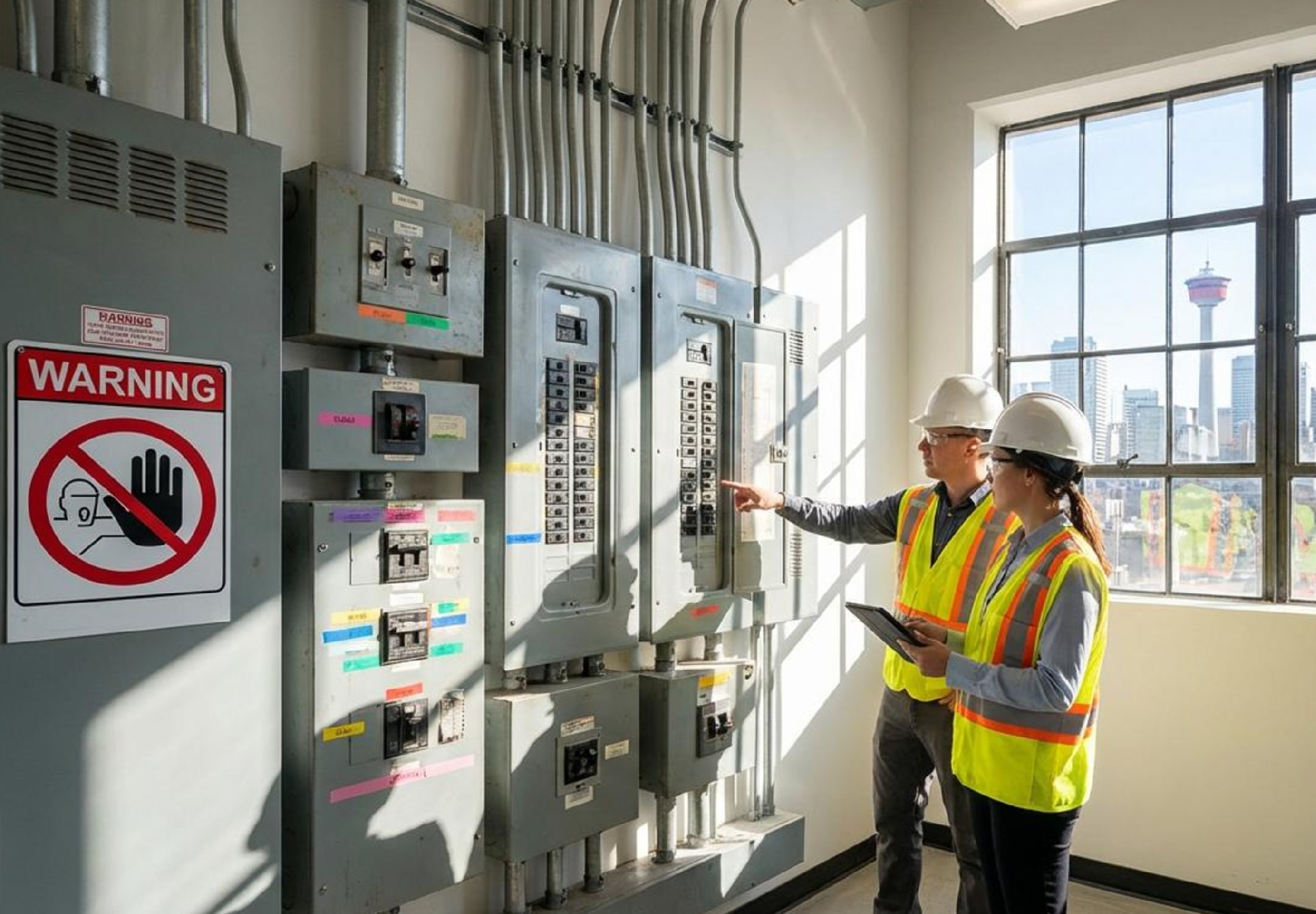
1. Find Out the Size and Condition of the Electrical Service
The electrical service is the main supply into the space. Ask the landlord or property manager:
- What is the amperage and voltage of the service to the space? (Typical examples are 120/208V three-phase or 277/480V.)
- Is it single-phase or three-phase? Shops and kitchens with larger equipment usually need three-phase.
- Is the service shared with other tenants, or dedicated to your unit?
- How old is the panel and the wiring, and has anyone inspected them recently?
If you don’t know how to read the answers, a licensed electrician can review the panel and tell you quickly whether it fits your plans.
2. Match the Space to Your Equipment
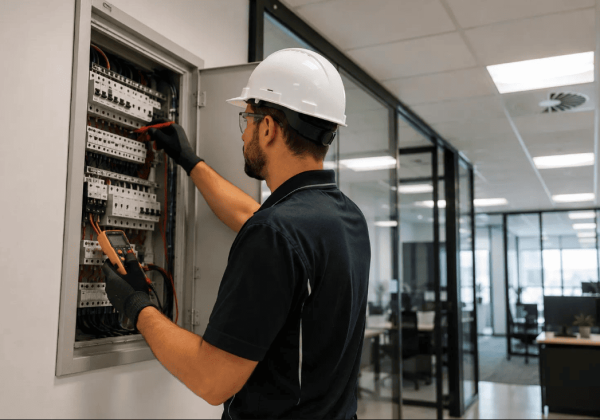
List every piece of equipment you plan to use, then compare it with the available capacity. Think beyond the obvious:
- Retail: registers, card readers, display and accent lighting, signage, refrigeration, security cameras
- Offices: workstations, servers or network closets, printers, break room appliances, conference room displays
- Trade shops: machinery, compressors, welders, power tools, battery chargers
Equipment with a high startup load, or that needs its own dedicated circuit, can use up capacity quickly. This is also the time to ask what you’d like to add in the next few years.
3. Check Whether There's Room in the Panel
A panel can have enough amperage and still have no open breaker spaces. Ask:
- How many spaces are open?
- Is a subpanel needed for your layout?
- Are the existing circuits labeled and accurate? Poorly labeled panels slow down every future repair.
4. Look at the Existing Lighting and What Your Space Type Requires
Existing fixtures may not suit how you plan to use the space. A dim, uneven layout might be fine for storage and wrong for a showroom or an office. Check:
- Whether the existing fixtures are worth keeping, or whether retrofitting to LED would reduce your energy costs
- Whether lighting controls (switching, dimming, sensors) match your needs
- Whether there is working emergency and exit lighting, since most occupied commercial spaces need it, and requirements depend on your use and the local jurisdiction
5. Plan for Data, Phone and Low-Voltage Systems Early
Power and data are best planned together. Decide where you need network drops, phone lines, security and access control, and where those will run. Putting this off until after the walls are finished is one of the more expensive mistakes a tenant can make.
6. Understand Who Pays for What
Read the lease for language about:
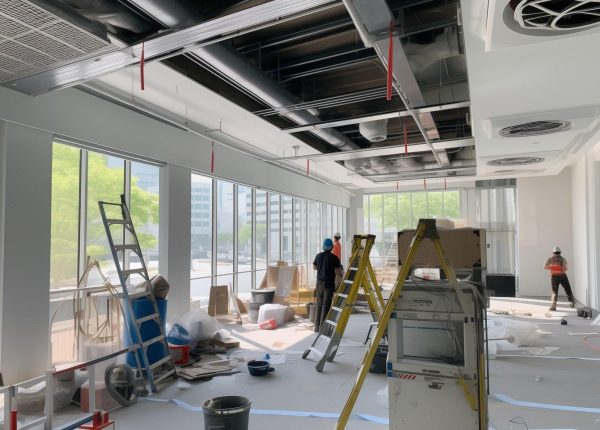
- Tenant improvement (TI) allowances, and what they do and don’t cover
- Who is responsible for upgrading the service or panel if your use needs more capacity
- Requirements for landlord approval of electrical work, approved contractors and insurance certificates
- What you must restore when the lease ends
7. Ask About Permits and Inspections
Electrical work in a commercial space generally requires a permit and inspection, and the process differs by city and county. Ask your electrician and your local building department early, so permit timing is in your schedule from the start.
A Quick Pre-Lease Electrical Checklist
- Service size, voltage and phase confirmed
- Equipment list compared against available capacity
- Open breaker spaces counted
- Panel and wiring condition reviewed
- Lighting and emergency lighting evaluated
- Data and low-voltage needs mapped
- Lease terms on upgrades and TI allowance reviewed
- Permit and inspection timeline confirmed
Frequently Asked Questions
Should I have an electrician look at a space before I sign a lease?
Yes, where possible. A short site visit can reveal capacity problems and give you an estimate to use in negotiations.
Who pays if the building needs an electrical upgrade?
It depends on the lease. Upgrades needed for your specific use are often the tenant’s cost unless negotiated otherwise, which is why the question matters before signing.
How do I know if a commercial space has enough power for my business?
Start by listing your equipment and its electrical needs, then compare that with the service size, voltage, phase and open breaker spaces in the panel. A licensed electrician can check this in a short site visit and tell you if the space needs an upgrade before you commit to the lease.
Does a commercial tenant need an electrical permit?
In most cases, yes. New circuits, panel changes, lighting changes and other electrical work in a commercial space usually require a permit and inspection. Rules differ by city and county, so ask your electrician and the local building department early, and include permit time in your opening schedule.
How long does commercial electrical work take?
It depends on the scope, material lead times and permits. Service and panel upgrades, in particular, can take longer than the interior work, so plan early.
Get the Electrical Side Right From the Start
Rolwes Electric helps businesses in Wentzville and the St. Louis area review a space before they commit and carry out the work afterward. If you’re planning a new location, learn more about our electrical design and installation for retail, office and trade premises or contact us to talk through your space.