
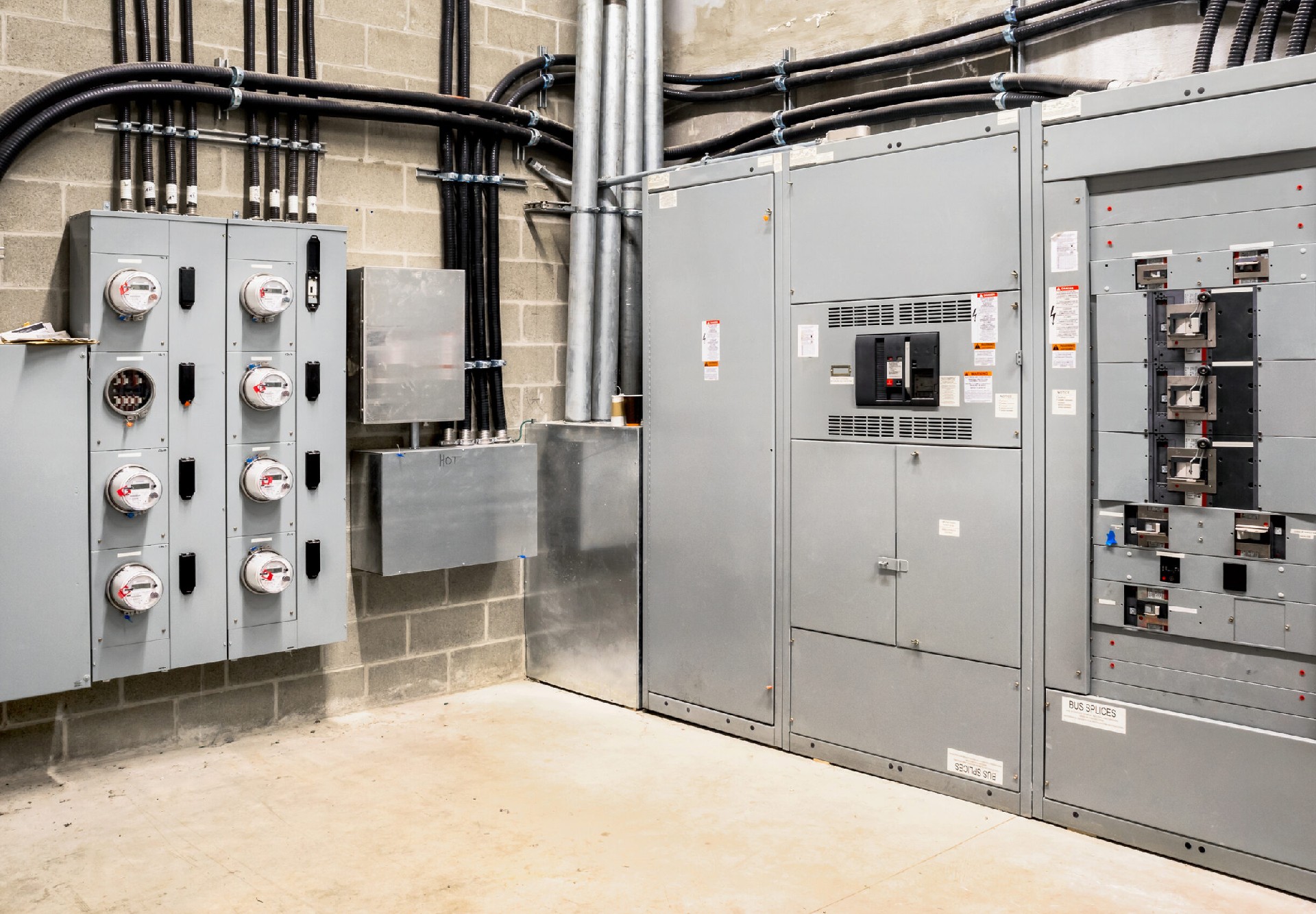
The clearest warning signs that a commercial electrical panel needs attention are breakers that trip repeatedly, a panel that feels warm or smells like burning, flickering lights when equipment starts, buzzing or crackling sounds, rust or scorch marks, a panel brand with known defects, and no spare capacity for the equipment you want to add. Most panels last about 25 to 40 years, but age alone does not tell the whole story. If you notice a burning smell, smoke, or sparks, treat it as an emergency.
Your electrical panel is the heart of your building’s power system. In a commercial space it feeds lighting, refrigeration, registers, computers, HVAC, and equipment your business cannot run without. A panel that is overloaded, damaged, or outdated does not just risk a tripped breaker. It can cause downtime, equipment damage, failed inspections, and in the worst cases a fire. Here are seven warning signs to watch for, what each one means, and what to do about it.
Before You Look: A Safety Note
Never remove a panel cover or touch a breaker or wiring yourself. Only a licensed electrician should open a panel. You can learn a lot from the outside by looking, listening, and smelling.
If you see smoke, sparks, or flames, leave the area and call 911. If you smell burning or find a hot panel, shut down nonessential equipment if it is safe to do so and call a licensed electrician right away.
1. Breakers That Trip Repeatedly
A breaker that trips once after an unusual surge is doing its job. A breaker that trips again and again during normal operations is a sign the circuit is overloaded, the breaker is wearing out, or the panel cannot keep up with your load. In commercial buildings this often shows up after new equipment, a tenant change, or added refrigeration.
What to do: do not keep resetting it, and never swap in a larger breaker to stop the tripping, which can overheat the wiring. Have an electrician check the load on the circuit and the condition of the breaker and panel.
2. A Warm Panel, Burning Smell, or Discoloration
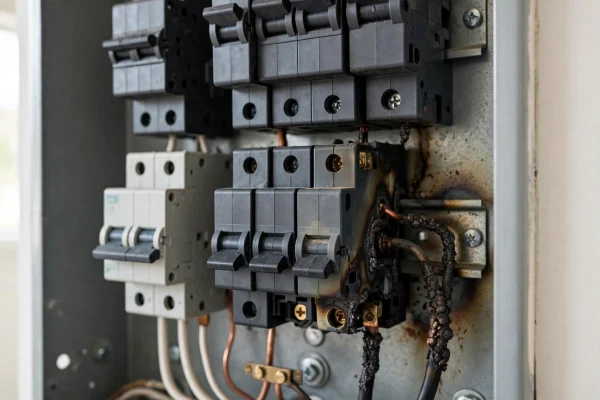
A panel should not feel hot, and it should never smell like burning plastic or hot metal. Heat, scorch marks, or melted insulation point to loose connections or overloaded components, which are fire risks.
What to do: treat this as urgent and call a licensed electrician right away. If you see smoke or sparks, leave and call 911. A thermal imaging scan under normal load can show which connections are overheating, often before they fail.
3. Flickering or Dimming Lights
Lights that dim when a compressor, oven, or other large equipment starts can mean your system is strained or a connection is loose. An occasional flicker can have other causes, but if it happens in several areas or alongside other signs on this list, the panel or service deserves a look.
What to do: note when it happens and which equipment is running, and share that with your electrician.
4. Buzzing, Crackling, or Sizzling Sounds
Sounds from a panel are not normal. Buzzing or crackling can point to a loose connection, arcing, or a failing breaker.
What to do: stay clear of the panel and call a licensed electrician promptly. Do not wait for the sound to get louder.
5. Rust, Corrosion, Moisture, or Pests
Moisture and corrosion break down connections and metal parts over time, which raises resistance and heat. Panels in damp areas, mechanical rooms, outdoor enclosures, and older buildings are most at risk. Look for rust on the cabinet or breakers, water stains, and signs of rodents or insects.
What to do: have an electrician inspect it. The source of the moisture also needs to be fixed, or a new panel will suffer the same fate.
6. A Panel Brand With Known Defects, or an Insurer Requirement
Some older panels have a documented record of failing to trip when they should. Federal Pacific Stab-Lok and Zinsco panels (also sold as Sylvania or GTE-Sylvania) are the best known, and some sources also flag Pushmatic panels. Many were installed from the 1950s through the 1980s and can still turn up in older commercial buildings and tenant spaces. Insurers increasingly ask for these panels to be replaced.
What to do: check the name on the panel door and breakers. If you see one of these brands, have a licensed electrician evaluate replacement. Do not wait for a problem.
7. No Room for Growth
A panel with no open spaces, double-tapped breakers (two wires on one terminal), or extension cords and power strips carrying permanent load has been outgrown. Commercial buildings often add equipment faster than they add electrical capacity: new refrigeration, kitchen equipment, server racks, EV chargers, or a new tenant.
As a rule of thumb, a panel that sits above roughly 80 percent of its rating during peak use is running close to its limit, and an electrician can confirm this with a load calculation.
What to do: before you add major equipment or sign a new tenant, have the capacity checked.
How Old Is Too Old for a Commercial Panel?
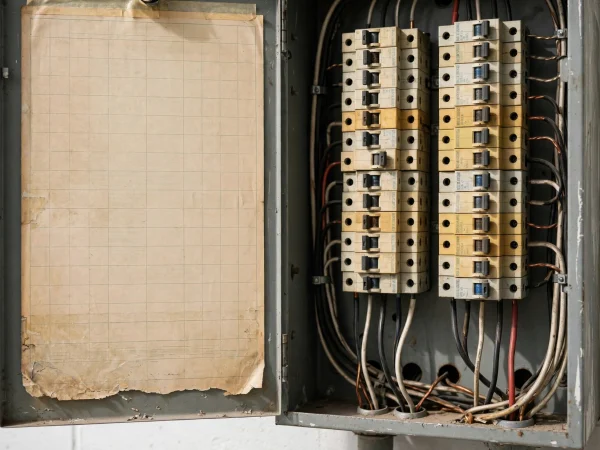
Most panels have a useful life of about 25 to 40 years, depending on brand, environment, load, and maintenance. A well-maintained panel can run longer, and a poorly protected one can fail sooner. Look for a date on the panel label or breakers, check your building records, and add thermal imaging to your maintenance routine.
Buildings that have been remodeled several times often have a panel that has been patched over and over. If you cannot tell what is feeding what, or the circuit directory is missing, that alone is a reason to schedule an evaluation.
What a Commercial Panel Evaluation Includes
A thorough evaluation typically covers:
– A visual inspection of the panel, enclosure, wiring, and surrounding area
– Brand and age identification, and a check for known problem equipment
– A thermal imaging scan while the system is under normal load
– A load review to see how close you are to capacity
– Checks for loose connections, double-tapped breakers, and mismatched breaker sizes
– A review of labeling and the circuit directory
– A written summary of findings and recommended next steps
A clear report gives you something to share with your landlord, insurer, or general contractor.
Repair, Replace Panel, or Upgrade Service?
Repair: a single failed breaker, a loose connection, cleaning, or relabeling. This works when the panel is otherwise sound.
Replace the panel: the panel is damaged, corroded, from a known problem brand, or obsolete with no available parts.
Upgrade capacity or service: your load has grown beyond what the existing service can safely supply, which may involve larger service equipment and coordination with the utility.
A load calculation, not a guess, should drive the decision.
Permits, Timing, and Downtime
Panel replacements and service upgrades require an electrical permit and inspection in nearly all jurisdictions, so confirm the requirements with your local building department before work begins. In O’Fallon, for example, commercial electrical remodels and repairs go through the city’s Building Division.
Plan the outage. Panel work means turning off power to part or all of the building. Schedule it for off-hours when possible, line up temporary power for critical equipment, and coordinate with your landlord and, for larger service upgrades, the utility.
We help businesses plan and complete panel work in O’Fallon and across Lincoln County, with the schedule built around your operation.
What Affects the Cost of a Commercial Panel Upgrade
Every building is different, so a written scope after a walkthrough is the only reliable way to get a price. These are the main factors:
– Panel size and type, and whether the service needs to be upgraded
– Condition of the existing wiring and conduit
– Number of circuits and any needed relocation
– Three-phase versus single-phase service
– Utility coordination and shutdown requirements
– Permits, inspection, and after-hours scheduling
– Whether the panel is indoors, outdoors, or in a hard-to-reach location
A Safe Five-Minute Walkthrough You Can Do Today
You do not need to open anything. Walk to your panel and check:
- Is the panel brand legible, and is it Federal Pacific, Zinsco, Sylvania, or Pushmatic?
- Is the cover or door warm to the touch, discolored, or rusty?
- Do you smell anything burning, or hear buzzing or crackling?
- Are the breakers clearly labeled, and do you know what each one feeds?
- Are there open breaker spaces for future equipment?
- Do you rely on extension cords or power strips for permanent equipment?
- Have your lights flickered or breakers tripped in the past month?
If you answered yes to any of the first three, call an electrician soon. If you answered yes to the last three, schedule an evaluation before your next equipment addition.
Commercial Electrical Panel Upgrade: Frequently Asked Questions
How do I know if my commercial electrical panel needs to be replaced?
Watch for repeated breaker trips, a warm panel, burning smells, buzzing or crackling, rust or scorch marks, a known problem brand, and no room for new load. An electrician can confirm with an inspection and load calculation.
How long do commercial electrical panels last?
Most last about 25 to 40 years, depending on brand, environment, load, and maintenance.
Is a panel upgrade the same as a service upgrade?
Not always. A panel upgrade replaces or enlarges the panel itself. A service upgrade increases the capacity coming into the building and may involve the utility, new meter equipment, and larger conductors.
Do I need a permit to replace a commercial electrical panel?
Almost always. Confirm the requirements with your local building department, and ask your electrician who will pull the permit and schedule inspections.
Can a panel be upgraded without shutting down my business?
Panel work requires turning off power to part or all of the building, but the downtime can often be planned for off-hours or phased, and temporary power can protect critical equipment.
Should I replace a Federal Pacific or Zinsco panel even if nothing is wrong?
Yes, have it evaluated. These panels have a documented record of breakers that may fail to trip, so many electricians and insurers recommend replacement regardless of age.
How much does a commercial panel upgrade cost?
It depends on panel size, service type, wiring condition, permits, and scheduling. A walkthrough and written scope are the only reliable way to get a price.
What should I do if my panel is hot or smells like burning?
Leave the area if you see smoke or sparks and call 911. Otherwise shut down nonessential equipment if it is safe and call a licensed electrician right away.
Not Sure About Your Panel? Schedule an Evaluation
Rolwes Electric can inspect your panel, scan it with thermal imaging, and give you a clear written summary and options. We serve businesses in O’Fallon, Lincoln County, and throughout our service area.