
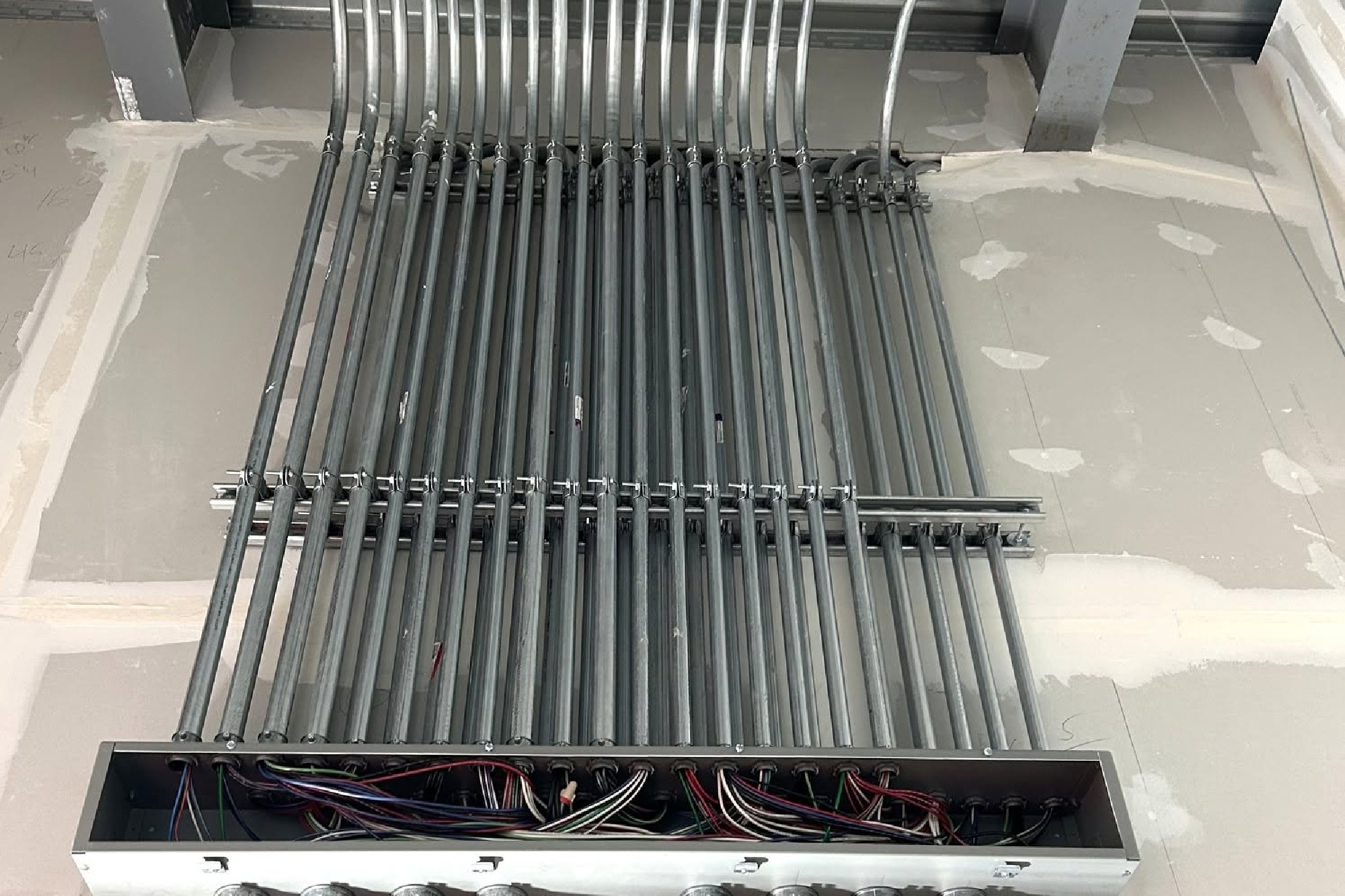
Behind every reliable electrical system is careful planning and precise execution, and nowhere is that more visible than in the conduit work itself. Every conduit run has to be carefully measured, bent, and routed to create an organized electrical system that’s built to last, not just wired to pass an inspection. Clean conduit work isn’t just about appearance. It’s a direct reflection of the craftsmanship, planning, and code discipline behind an entire electrical installation, and it’s one of the clearest signs of the quality of contractor you’re working with.
What Conduit Actually Does, and Why It Matters
Conduit is the protective tubing that houses and routes electrical wiring throughout a commercial or industrial building. Beyond protecting wiring from physical damage, moisture, and environmental wear, properly installed conduit plays a real role in fire safety, code compliance, and how easily a system can be maintained or expanded down the road. A building with poorly planned conduit routing isn’t just harder to look at, it’s harder to troubleshoot, harder to expand, and more prone to long-term issues that a rushed or careless installation tends to create.
What Sets Organized Conduit Work Apart
A few specific qualities separate genuinely well-executed conduit work from a rushed job:
Measured, deliberate routing. Every run is planned before it’s installed, following a logical path rather than the shortest distance between two points, which keeps the system organized and easier to trace later.
Consistent, clean bends. Properly bent conduit maintains even spacing and avoids unnecessary stress on the wiring inside, which protects both the conduit and the wire over the life of the system.
Parallel, uniform runs. When multiple conduit runs travel together, keeping them evenly spaced and aligned isn’t just visually cleaner, it makes future maintenance and additions significantly easier for any electrician working on the system later.
Proper support and securing. Conduit that’s adequately supported at correct intervals prevents sagging, stress on connections, and long-term wear that can eventually lead to failures.
Logical labeling and organization at panels and junction points. Well-organized terminations make it far easier to identify circuits during future maintenance, troubleshooting, or an electrical inspection.
Why This Level of Detail Actually Matters for Your Business
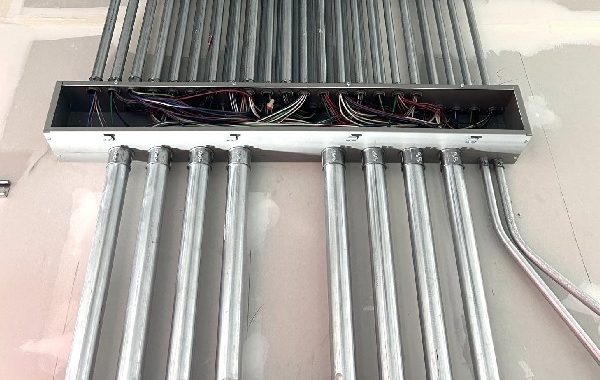
It’s easy to assume conduit work is a cosmetic detail that doesn’t affect how your building actually functions, but that’s not accurate. A poorly organized system takes longer to troubleshoot when something goes wrong, which means longer downtime and higher labor costs when repairs are needed. It’s also more prone to errors during future work, since a disorganized system is harder for any electrician, including one who didn’t originally install it, to safely and accurately work on.
And when it comes to inspections, a system that clearly reflects proper planning and code compliance tends to move through the process more smoothly than one that raises questions simply because of how it looks.
What Poor Conduit Work Often Signals
If you’ve had electrical work done and the conduit routing looks rushed, inconsistent, or haphazard, it’s worth taking that as a signal rather than dismissing it as a cosmetic issue. Corners cut on something as visible as conduit organization are sometimes a sign that corners were cut elsewhere too, in areas you can’t see as easily, like wire sizing, grounding, or connection quality. Craftsmanship tends to be consistent throughout a project. A contractor who takes the time to route conduit properly is generally the same contractor taking the time to get the parts of the job you can’t see right as well.
How We Approach Conduit Work at Rolwes Electric
On every commercial and industrial project we take on throughout Wentzville and St. Charles County, our team plans conduit runs before installation begins, rather than routing as we go. That planning is what allows for the kind of clean, parallel runs and organized terminations you’d see on any of our completed projects, whether it’s a straightforward tenant buildout or a larger industrial installation with dozens of runs feeding a single panel. We treat conduit organization as a reflection of the quality of the entire job, not a separate afterthought once the functional wiring is complete.
If you’re evaluating a commercial electrical contractor for an upcoming project, it’s worth asking to see examples of their past conduit work. It tells you more about how a contractor approaches a job than almost anything else you could ask.
Frequently Asked Questions
What types of conduit are commonly used in commercial electrical work?
Common types include EMT (electrical metallic tubing), rigid metal conduit, and PVC conduit, each suited to different applications depending on factors like location, exposure to the elements, and code requirements. A licensed electrical contractor will select the appropriate type based on your specific project and building conditions.
Does messy conduit work actually violate electrical code?
Not always. Code primarily addresses safety requirements like support spacing, bend radius limits, and proper securing, rather than aesthetics specifically. That said, some of the same issues that make conduit work look disorganized, such as inadequate support or improper bends, can also be genuine code violations, which is why organized routing and code compliance tend to go hand in hand.
Can existing messy conduit work be reorganized without a full rewire?
In many cases, yes, particularly if the underlying wiring is in good condition and the issue is primarily how the conduit itself was routed and supported. An electrical contractor can evaluate whether a reorganization is feasible or whether a more extensive rework is actually needed.
Why does conduit organization matter for future electrical work?
Organized, clearly routed conduit makes it significantly easier for any electrician, not just the original installer, to trace circuits, add new equipment, or troubleshoot an issue. Disorganized systems slow down every future project touching that electrical infrastructure, which adds cost and time to work that should otherwise be straightforward.