
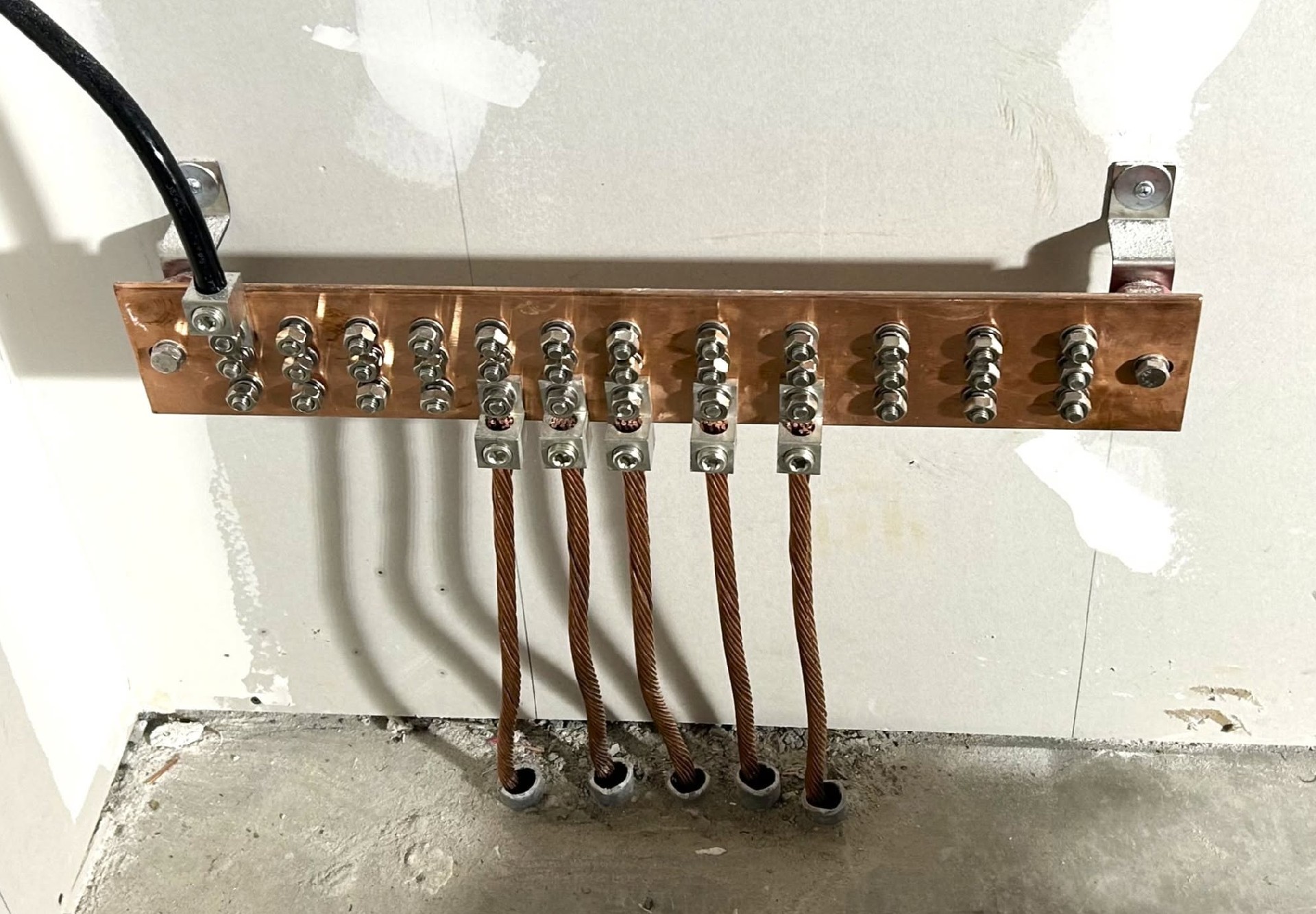
A grounding busbar is a solid bar, usually copper, that serves as a central connection point for the grounding and bonding conductors in an electrical system. During an electrical fault, it helps give unwanted electrical energy a safe, low-impedance path away from equipment and people, so the circuit’s protective device can open and clear the fault.
It may not look like much, but this copper bar plays a big role in electrical safety. It is one of those components most people never notice, yet every commercial electrical system depends on it. This guide explains what a grounding busbar does, how it works, where you will find one, and why it matters for your building.
What Does a Grounding Busbar Do?
A grounding busbar gives grounding conductors one organized, reliable place to connect. Instead of loose wires scattered around an enclosure or room, every grounding conductor lands on a common bar. That brings several benefits:
– It provides a central connection point for equipment grounding and bonding conductors
– It helps create a low-impedance path for fault current to travel back toward the source
– It helps circuit breakers and fuses trip quickly when a fault occurs
– It helps keep exposed metal parts at a safe voltage, protecting people who touch equipment
– It supports the safe operation of sensitive electronics and surge protection
– It makes the system easier to inspect, test, and maintain
How a Grounding Busbar Works During a Ground Fault
A ground fault happens when an energized conductor touches a metal part that should not carry current, such as the enclosure of a motor, a panel, or a piece of kitchen equipment. Here is what a properly grounded system does:
- An energized conductor touches grounded metal, such as an equipment enclosure
- Fault current flows through the equipment grounding conductor to the grounding busbar
- The busbar connects that path back toward the source of the system
- Because the path has very low impedance, a large amount of current flows quickly
- The breaker or fuse senses the surge and opens the circuit
- The fault is cleared, and the metal parts are no longer energized
The key is that the path has to be permanent, continuous, and able to carry the fault current. Without a good path back to the source, a protective device may not trip quickly, and the metal part stays energized.
Grounding vs. Bonding vs. Neutral: What Is the Difference?
These three terms are often mixed up, so here is a quick guide.
Grounding: connecting the electrical system and equipment to earth through the grounding electrode system.
Bonding: connecting metal parts together so they stay at the same potential and form a continuous path for fault current.
Neutral: the conductor that carries return current during normal operation. Neutral and ground are connected at the main service, but beyond that point they are generally kept separate, with separate bars in panels and subpanels.
A grounding busbar serves the grounding and bonding functions. It is not a neutral bar, and the two should not be confused or mixed.
Where You Will Find Grounding Busbars in Commercial Buildings
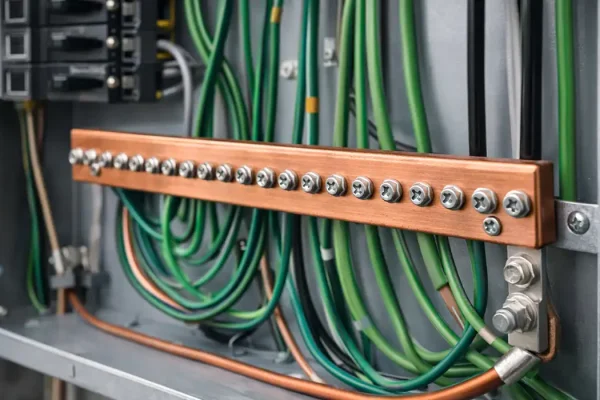
Grounding busbars appear in many places in a commercial or industrial facility:
– Inside panelboards and switchboards, where equipment grounding conductors terminate
– In electrical rooms, where separate wall-mounted copper bars collect grounding conductors from multiple sources
– At distribution equipment and subpanels throughout the building
– In telecommunications and data rooms, where specialized grounding busbars connect network equipment and racks to the building’s grounding system
– In industrial control panels and equipment rooms
The size, material, and number of terminations depend on the system, the expected fault current, and the code requirements for the installation.
Why Commercial and Industrial Systems Depend on Proper Grounding
Commercial and industrial buildings have higher loads, more equipment, and more people than a typical small building, which raises the stakes for grounding.
Safety: proper grounding helps protect employees, customers, and visitors from shock hazards
Equipment protection: a clear fault path and stable grounding help protect motors, controls, and electronics
Reliability: poor grounding is a common source of nuisance trips and strange equipment behavior
Fire prevention: faults that clear quickly are less likely to start fires and cause serious damage
Code compliance: the National Electrical Code covers grounding and bonding in Article 250, which is one of its largest articles, and inspectors check it
Insurance and liability: documented, code-compliant grounding supports your insurance and safety programs while reducing potential risks
Signs of a Grounding Problem in a Commercial Building
Grounding problems are not always obvious. Watch for these warning signs:
– Employees feel a tingle or shock when touching equipment, sinks, or metal fixtures
– Breakers trip repeatedly with no clear cause
– Sensitive equipment locks up, resets, or shows data errors
– Corrosion, discoloration, or burn marks at grounding connections
– Loose or missing grounding conductors in electrical rooms or panels
– Failed or flagged items on an inspection report
If you notice any of these, call a licensed electrician. Do not open panels or touch grounding connections yourself, because live parts may be nearby.
Who Should Install and Inspect Grounding Equipment?
Grounding is safety equipment, and it has to be done right. A licensed electrician should install, inspect, and test it. A qualified electrician will:
– Size conductors and bars for the system and the expected fault current
– Make clean, properly torqued connections with the correct lugs and hardware
– Confirm continuity from equipment back to the grounding system
– Check that neutral and ground are separated where required
– Document the work and support inspections
Regular thermal imaging inspections can also reveal loose or overheating connections before they fail.
Planning Grounding for Tenant Buildouts, Upgrades, and New Construction
Grounding should be part of the plan from day one, not an afterthought. When you add equipment, remodel a space, upgrade a panel, or build new, ask your electrician how the grounding and bonding will be handled and documented.
That is especially important for server rooms, kitchens, manufacturing equipment, and anything with sensitive electronics. If you are planning a buildout, our commercial electrician in O’Fallon can walk your space and review the electrical scope before work begins. If your panel is aging, see the warning signs your commercial electrical panel needs an upgrade.
Grounding Busbar: Frequently Asked Questions
What is a grounding busbar?
A grounding busbar is a conductive bar, usually copper, that serves as a central connection point for grounding and bonding conductors. During a ground fault it helps give unwanted electrical energy a safe, low-impedance path away from equipment and people so protective devices can trip.
What is the difference between a ground bar and a neutral bar?
A neutral bar carries return current during normal operation. A ground bar carries current only during a fault. Beyond the main service, they are generally kept separate.
What is the difference between grounding and bonding?
Grounding connects the electrical system to earth. Bonding connects metal parts together so they stay at the same potential and form a continuous path for fault current.
Where is the grounding busbar located?
Often inside panelboards and switchboards, and in electrical rooms on a wall-mounted copper bar. Telecommunications rooms have their own grounding busbars.
What happens if grounding is missing or poor?
A fault may not draw enough current to trip the breaker quickly, and metal parts of equipment can stay energized, which raises the risk of shock, equipment damage, and fire.
Is a ground bar the same as a grounding busbar?
In everyday use, yes. People also say ground bus bar, grounding bar, or ground bus.
Do all commercial panels have a ground bar?
Panelboards are generally built with a terminal bar for equipment grounding conductors, and how it is connected depends on whether the panel is service equipment or a subpanel. A licensed electrician can confirm this for your panels.
Who should install a grounding busbar?
A licensed electrician should install and inspect grounding equipment so it meets code and works as designed.
Questions About Your Building's Grounding?
Rolwes Electric can inspect your electrical rooms and panels, check grounding and bonding connections, and give you a clear written summary.
Phone: 314-249-5563
Email: info@rolweselectric.com
Hours: Monday to Friday, 7 AM to 4 PM
Related reading: warning signs your commercial electrical panel needs an upgrade, how often to schedule thermal imaging, and how much commercial electrical work costs in St. Charles County.