
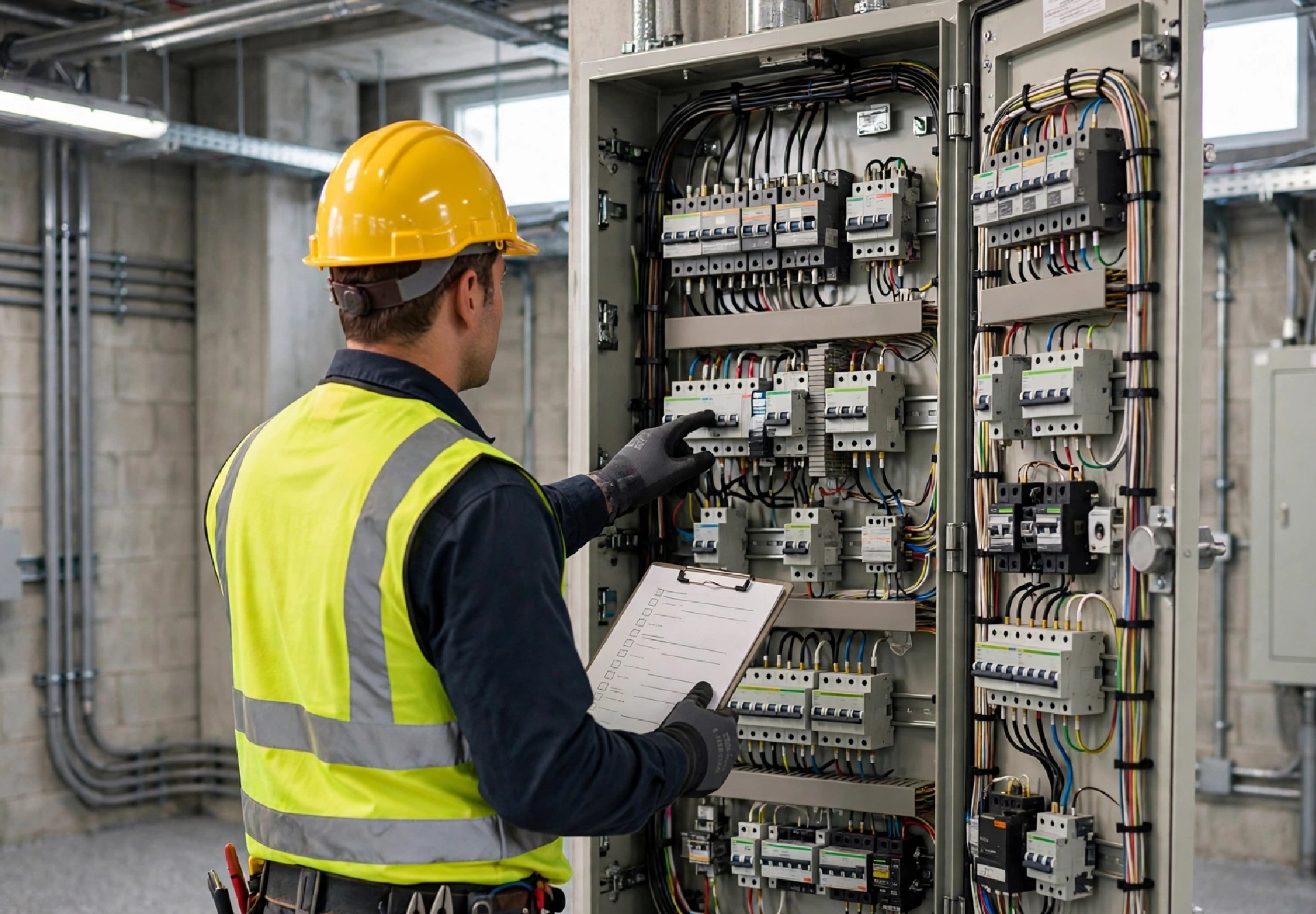
Commercial electrical code compliance Missouri business owners worry about is rarely about the paperwork itself. It’s about the questions behind it: Is my building safe? Will I pass inspection? Could I lose time, money or insurance coverage over something I didn’t know about? The good news is that compliance is manageable once you understand who sets the rules and what inspectors look for. And done right, it protects far more than your permit.
This guide explains how electrical code compliance works in Missouri, what it protects, what to check in your own building, and what to do if you find a problem.
Quick answer: Missouri has no single statewide electrical code. Each city or county adopts its own, usually based on the National Electrical Code (NEC), so the rules and the edition can differ from one town to the next. Commercial electrical code compliance Missouri businesses need comes down to five steps: confirm which codes apply to your address, get permits before work starts, hire a licensed electrician, pass inspections, and keep the system maintained.
This post is general information, not legal or engineering advice. Requirements depend on your location, your building and the type of work, so confirm them with your local building department and a licensed electrician.
Commercial Electrical Code Compliance Missouri: Why It Depends on Your City
The National Electrical Code (NFPA 70) is the most widely used safety standard for electrical installations, and it’s updated every three years. But the NEC isn’t law until a government adopts it. In many states, the state does that for everyone. Missouri doesn’t. Cities and counties adopt their own codes and their own amendments, and they don’t all use the same edition.
That’s why a contractor who works in several communities has to check the rules for each one. For example, the City of Wentzville publishes its adopted building codes, including its NEC edition, on its website. A neighboring city may use a different edition or different local changes.
Commercial electrical code compliance Missouri businesses face usually involves more than one authority:
| Who | What they typically cover |
|---|---|
| City or county building department | Electrical permits, plan review and inspections under the adopted NEC and building codes |
| Fire district or fire marshal | Fire alarms, emergency and exit lighting, and other life-safety systems, often under fire codes and NFPA standards |
| Your electric utility | Service connection and metering requirements |
| OSHA and NFPA 70E | Worker safety around electrical equipment |
| Your insurer and landlord | Their own requirements, which can go beyond code |
How to find out which code applies to you
Call or visit your city’s building department (or the county if you’re unincorporated) and ask three things: which NEC edition is adopted, whether there are local amendments, and what permits and inspections your project needs. Many cities post their adopted codes on their website. Wentzville, for example, publishes its adopted building codes, and you can also ask your electrician to confirm.
What Code Compliance Actually Protects
Your people and property
The purpose of the code is safety. Requirements for grounding, overcurrent protection, wiring methods, working clearances and ground-fault protection exist to reduce the risk of shock and fire. Compliance is the minimum safety standard, not a guarantee, which is why ongoing maintenance matters too.
Your opening date and your budget
Work that wasn’t permitted or doesn’t meet code tends to be found at the worst time: at final inspection. A failed inspection can mean corrections, re-inspection fees, and a delayed opening. Planning for compliance at the design stage costs far less than rework after the walls are closed, saving both time and money.
Your insurance and liability
Insurers and adjusters may ask whether work was permitted and inspected, especially after an electrical fire or loss. Unpermitted or non-compliant work can complicate a claim and your liability. Check your policy and ask your insurer what documentation they want before starting any work.
Your lease, sale or refinance
Landlords, buyers and lenders often ask for permits and inspection records. A clean record for your electrical work can save time and avoid surprises. Good commercial electrical code compliance Missouri owners invest in also gives you documents you can show when you need them.
What Inspectors Commonly Look For
Every inspection is different, and the inspector’s judgment and local rules apply. In general, electrical inspections commonly review:
- Work that matches the approved plans and the permit
- Proper wire sizing, breakers and overcurrent protection for the loads
- Grounding and bonding
- GFCI protection where required (for example, near water and in some outdoor and kitchen areas)
- Clear, labeled panels with accessible working space
- Properly supported, protected and listed wiring and equipment
- Emergency and exit lighting, and fire alarm connections, where they apply (these may also be reviewed by the fire district)
Your Commercial Electrical Code Compliance Missouri Checklist

Use this list for a new build-out, an expansion or a renovation:
1. Confirm the rules. Ask the building department which NEC edition and local amendments apply, and whether the fire district has requirements.
2. Plan before you build. Share your equipment list and layout with your electrician early, so loads, panels and lighting are designed correctly.
3. Get permits before work starts. Don’t start work and “sort out the permit later.”
4. Hire a licensed electrician. Ask for proof of licensing and insurance valid where you’re building. Licensing rules can differ by city.
5. Schedule inspections. Your electrician or your general contractor should schedule rough-in and final inspections, and be present for them.
6. Fix and document. If an inspector lists corrections, have them done and re-inspected, and keep the sign-off.
7. Keep your records. Store permits, inspection results, panel schedules and drawings in one place.
8. Maintain the system. Code compliance at installation doesn’t keep equipment safe years later. Regular inspection and testing does. See our guide to seasonal commercial electrical maintenance in Missouri.
Warning Signs Your Building May Have a Compliance Problem
Older buildings aren’t automatically out of compliance. In many cases, existing systems are judged by the rules in place when they were installed, but alterations and additions usually need to meet current requirements. The local code official makes the call. Watch for:
- Work that was done without a permit, such as added circuits, a relocated panel or a tenant build-out
- Missing GFCI protection in wet or outdoor areas
- Panels that are blocked, unlabeled or have no space left
- Breakers that trip repeatedly, or overloaded circuits
- Extension cords or power strips used as permanent wiring
- Burn marks, buzzing, or outlets and panels that feel warm (call an electrician right away; if you see smoke or smell burning, leave the building and call 911)
- Do-it-yourself wiring or work by someone who isn’t licensed
What to Do If You Find a Problem
- Don’t panic, and don’t DIY. Electrical repairs should be done by a licensed electrician.
- Handle hazards first. If something is hot, sparking or damaged, shut off the affected equipment if it’s safe to do so and call us.
- Document it. Take photos and write down what you saw and when.
- Get an assessment. A site survey and system safety audit can identify what’s wrong and what is a priority.
- Talk to your landlord or property manager if you rent. Responsibility for the building’s electrical system is often set out in the lease.
- Work with the local building department if corrections or permits are needed. Fixing issues voluntarily is usually better than having them found later.
Questions to Ask Any Electrical Contractor About Compliance
- Are you licensed to work in my city, and can I see proof of license and insurance?
- Do you pull the permits, and who schedules inspections?
- Which NEC edition and local amendments apply to my project?
- How do you handle inspection corrections?
- Will I receive copies of the permit, inspection sign-offs and an updated panel schedule when you finish?
- Can you coordinate with my general contractor, landlord and the fire district?
A contractor who answers these clearly is a good sign.
Frequently Asked Questions
Does Missouri have a statewide electrical code?
No. Missouri leaves adoption of the NEC to local jurisdictions, so each city or county decides which edition to enforce and whether to amend it. Always check the rules for the specific address.
Do I need a permit for commercial electrical work?
In most cases, yes, including for alterations and additions, not just new buildings. Requirements vary by city and county, so ask the building department before work begins.
What is the NEC?
The National Electrical Code, or NFPA 70, is a safety standard for the installation of electrical wiring and equipment. It’s revised every three years, and local governments adopt it on their own schedule.
What happens if I fail an electrical inspection?
The inspector will list the corrections required. Once they’re fixed, you request a re-inspection. A failed inspection can delay occupancy or opening, which is why planning for code up front matters.
Is my older building out of code?
Not necessarily. Existing systems are often evaluated under the rules in effect when they were installed, but additions and alterations typically need to meet current requirements. Your local code official decides, and an electrician can review your building and tell you where it stands.
If my building passed inspection, do I still need maintenance?
Yes. Inspection confirms the installation at one point in time. Connections loosen, equipment ages and loads change, so ongoing testing and maintenance keeps a compliant system safe.
Get Clear Answers From Rolwes Electric
Compliance doesn’t need to be confusing. Rolwes Electric helps Wentzville-area businesses design, install and maintain electrical systems that meet the codes that apply to them. If you’re planning a project, preparing for an inspection, or you’re worried about your building’s current condition, contact us or call 314-249-5563, and we’ll walk through it with you.